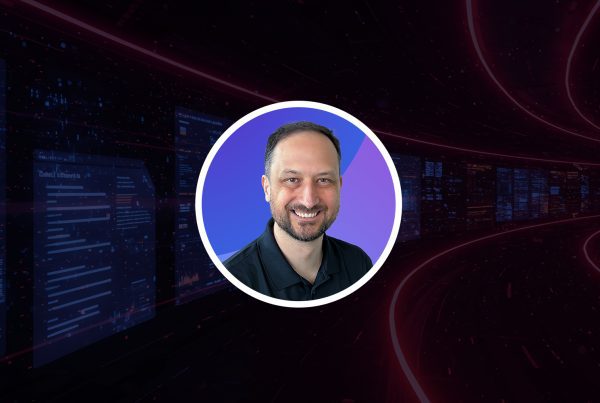
“Work That Matters” is a series in which Everforth ECS experts discuss their roles and responsibilities and the larger impact they have in the workplace, community, and world. In this installment, we interview Mike Malinowski, Senior Solutions Architect at Everforth ECS. After 37 years protecting the FBI’s IT infrastructure from the inside, Mike brought that same mission-first mindset to Everforth ECS, where he now helps the Bureau modernize identity management and quantum-proof its network encryption — a prime example of the high-impact cybersecurity and information security mission roles offered by our organization.

Q: Tell us a little about your background. What led you to Everforth ECS?
A: I spent 37 years in IT at the FBI. By the time I retired, I was a senior executive section chief managing the enterprise’s corporate infrastructure: over 100 employees, and the build-out of a corporate data center that housed not just FBI entities, but DOJ entities as well.
I was brought in to help run our FBI and DOJ contracts and grow our customer support, and that’s largely what I’ve been doing ever since. I was drawn to Everforth ECS because I’d seen the strength of their footprint inside the FBI. They were extremely mission-focused. As a former executive who watched many contractors come and go, you get a feel for who’s truly in it for the mission, not just the paycheck. Everforth ECS has always been one of the ones in it for the mission.
Q: What does that mission-first approach mean for the customers we ultimately serve?
A: It means the FBI and its partners can be confident that whatever gets done is done in accordance with regulations and law, and as efficiently as possible. Not grossly spending taxpayer dollars on something that doesn’t actually serve the mission.
In my previous role, I never thought of myself as just a section chief. I saw myself as a steward of taxpayer money, and that’s a mission I’ve carried straight into my work at Everforth ECS.
Q: What are you working on now?
A: For the better part of a year, I’ve been working on network encryption, specifically around quantum-proofing. It’s the frontline security job that keeps our vital national security data safe.
Adversaries are getting smarter and more technologically advanced, and the intelligence community has to stay ahead. Post-quantum cryptography keeps the data the agency relies on, including its investigative data, secure for their use and no one else’s. Everforth ECS has been on the front lines of keeping that information protected.
Q: Is there a project you’re especially proud of?
A: The identity management work stands out. The FBI was trying to keep its identity management systems current and running efficiently. We proposed a solution built on modern software and approaches, informed by our past performance with other agencies, to help them streamline and modernize that side of the house. It’s a good example of matching the right technology to the mission at the right time.
Q: What do you think are the key ingredients for successfully partnering with the government and supporting the mission?
A: Adaptability. We’re genuinely flexible in adapting to the mission and changing technology. We work to get the latest and most effective tools into systems without ever compromising the level of security the government sector demands.
That adaptability is backed by something harder to manufacture: intimacy with the customer. Because we are mission-focused, we’ve built a real level of trust with our customers, the kind that comes from years of strong outcome delivery. Plus, there are people in our workforce that have spent time in the Bureau and other important federal agencies, making us a partner the government knows they can rely on.
Q: What’s one personal skill or mindset you’d say is essential to succeeding in your role?
A: Staying open-minded about technology. The worst thing you can do in this line of work is get pigeonholed into one set of tools. Success comes from staying flexible and fitting the right technology to the mission in front of you. That mindset is just as relevant whether you’re coming from a traditional IT job background or a more specialized cybersecurity analyst job — adaptability is what carries you.