
Enabling Secure, Distributed Manufacturing at the Point of Need
A Case Study on the DoW’s Digital Manufacturing Exchange (DMX)

The Challenge
Enabling Secure, Coalition-Ready Manufacturing
As global operations become increasingly distributed and contested, the Department of War (DoW) faces growing challenges in maintaining equipment readiness. Thousands of critical components are delayed, obsolete, or no longer produced, often grounding mission-essential assets such as tanks or naval vessels for weeks or even months.
At the same time, the DoW identified a fundamental gap: There was no secure, unclassified platform to reliably share technical data between the DoW, industry, and coalition partners. The data existed, but there was no secure way to deliver it where and when it was needed. Several barriers continued to limit operational readiness, including:
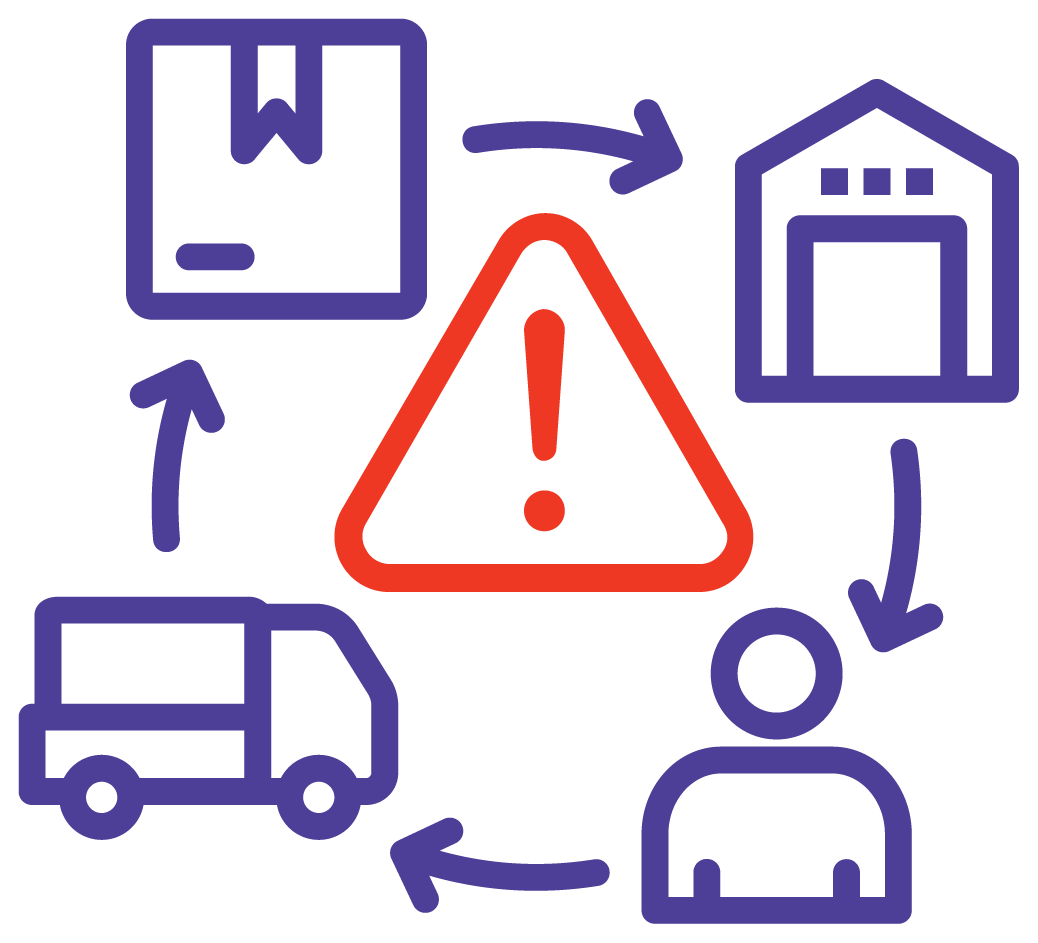
Lengthy supply chains delaying repairs and maintenance

Inability to securely share technical data packages (TDPs) across organizations

Intellectual property (IP) risks preventing industry participation

Lack of interoperability between military, industry, and allied partners

Disconnected and contested environments limiting data access at the edge
Without a unified solution, even simple part failures, such as ventilation components, could sideline major assets for extended periods, driving operational risk and millions in additional costs.
To meet mission demands, the DoW needed the ability to digitally transmit those TDPs, or manufacturing instructions, and produce parts in-theater, supplementing traditional supply chains (or bypassing them and their associated barriers) entirely. This represented a fundamental shift in logistics and readiness: moving from centralized supply chains to distributed, on-demand manufacturing at the edge.
The Solution
DMX on SUNet: A Secure Digital Manufacturing Exchange
To address this challenge, Everforth ECS — through its management of the DoW’s Secure Unclassified Network (SUNet) — enabled the Digital Manufacturing Exchange (DMX).
DMX is a cloud-based platform that facilitates the controlled exchange of TDPs across the DoW, industry, and coalition partners. In practical terms, this allows units to access approved digital part designs and manufacture critical components wherever they are operating, rather than waiting weeks or months for replacement delivery.
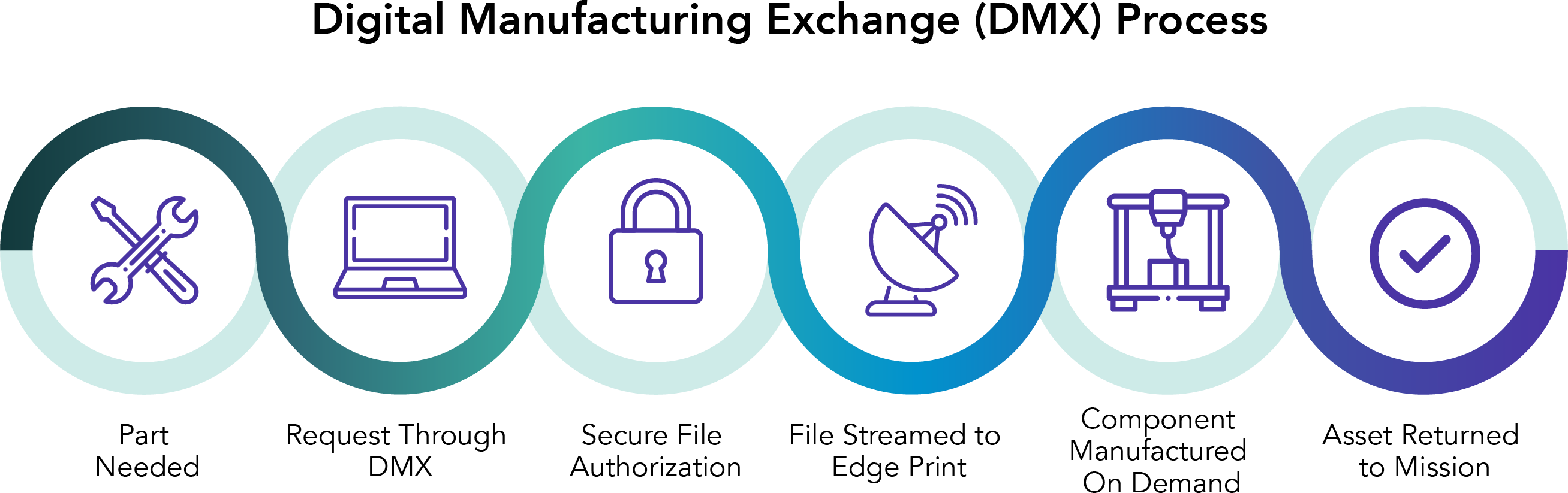
The platform also provides controlled access to original equipment manufacturer (OEM) IP and, through SUNet’s secure cloud infrastructure, enables collaboration across military, industry, academia, and allied partners, even in contested or disconnected environments.
The result is is faster decision-making, faster production, and faster return to mission readiness, without compromising security or IP protection.
Everforth ECS’ Role: Secure Infrastructure and Access Enablement
At the foundation of this capability is SUNet, the secure, accredited environment that makes DMX possible. By managing SUNet, Everforth ECS provides:
A secure, Authority to Operate (ATO)-accredited environment
Zero trust, identity-based access controls
Secure access for non-traditional users (industry, foreign partners, academia)
Protection of sensitive IP
This is critical because the value of DMX depends on participation. Without SUNet, these stakeholders could not securely access the platform, limiting collaboration, slowing innovation, and reducing mission impact. By enabling secure access at scale, Everforth ECS ensures that the right data reaches the right users at the right time, across organizational and geographic boundaries.
A key innovation within DMX is the ability to securely deliver manufacturing data directly to edge environments. Capabilities include streaming-based delivery of files to 3D printers (instead of full downloads) and low-bandwidth operation modes for deployed environments.
This approach significantly reduces the risk of IP compromise while ensuring that even in constrained or contested environments, operators can still manufacture mission-critical components. In effect, a usable manufacturing capability is delivered directly to the point of need.
The Results
Transforming Operational Readiness Through Distributed Manufacturing
In scenarios where critical replacement parts are delayed, even mission-ready assets (for example, a tank or a submarine) can remain sidelined for months. DMX eliminates that bottleneck, restoring readiness faster and avoiding costly delays.
DMX has transformed how mission partners operate on a broad scale. Instead of relying solely on centralized supply chains, teams can now manufacture parts closer to the point of need, collaborate across organizations in real time, and securely share sensitive data without exposing intellectual property.
The impact is a more resilient, responsive, and scalable model for logistics that enables coalition partners to function as a unified force.
Looking Ahead
Scaling a Global Manufacturing Ecosystem
DMX is positioned to evolve into a program of record supporting large-scale operations across the DoW and its mission partners.
Future efforts are focused on expanding this capability globally, including scaling to thousands of users across military branches, allied nations, industry, and academia, while integrating new advanced manufacturing technologies and supporting major joint exercises.
As adoption grows, DMX will continue to strengthen coalition interoperability and enable new operational models for distributed manufacturing.
By enabling DMX on SUNet, Everforth ECS is helping transform mission readiness by enabling the secure, on-demand manufacturing of critical components anywhere in the world.
Enjoy Everforth ECS Articles Like This One?
Don’t Miss Any.

Everforth ECS Secures Position on $58M CPSC Data Solutions BPA
Everforth ECS secures a prime position on CPSC's $58M Data Solutions BPA and its first task order, applying cloud modernization, data engineering, and AI enablement to advance federal data modernization and strengthen consumer product safety.
Training Mission: On Training the US Army to Use the Army Endpoint Security Solution
When AESS's platform changed, Everforth ECS rebuilt its Army training program in under three weeks. Explore how this program continues to evolve even after training 2,000+ Army cyber defense personnel.

How Agentic AI Is Redefining the Modern SOC
Mark Maglin explains how agentic AI helps modern security operations centers investigate every alert, reduce backlogs, accelerate triage, and strengthen analyst effectiveness while preserving human oversight, auditability, and federal governance requirements at scale.